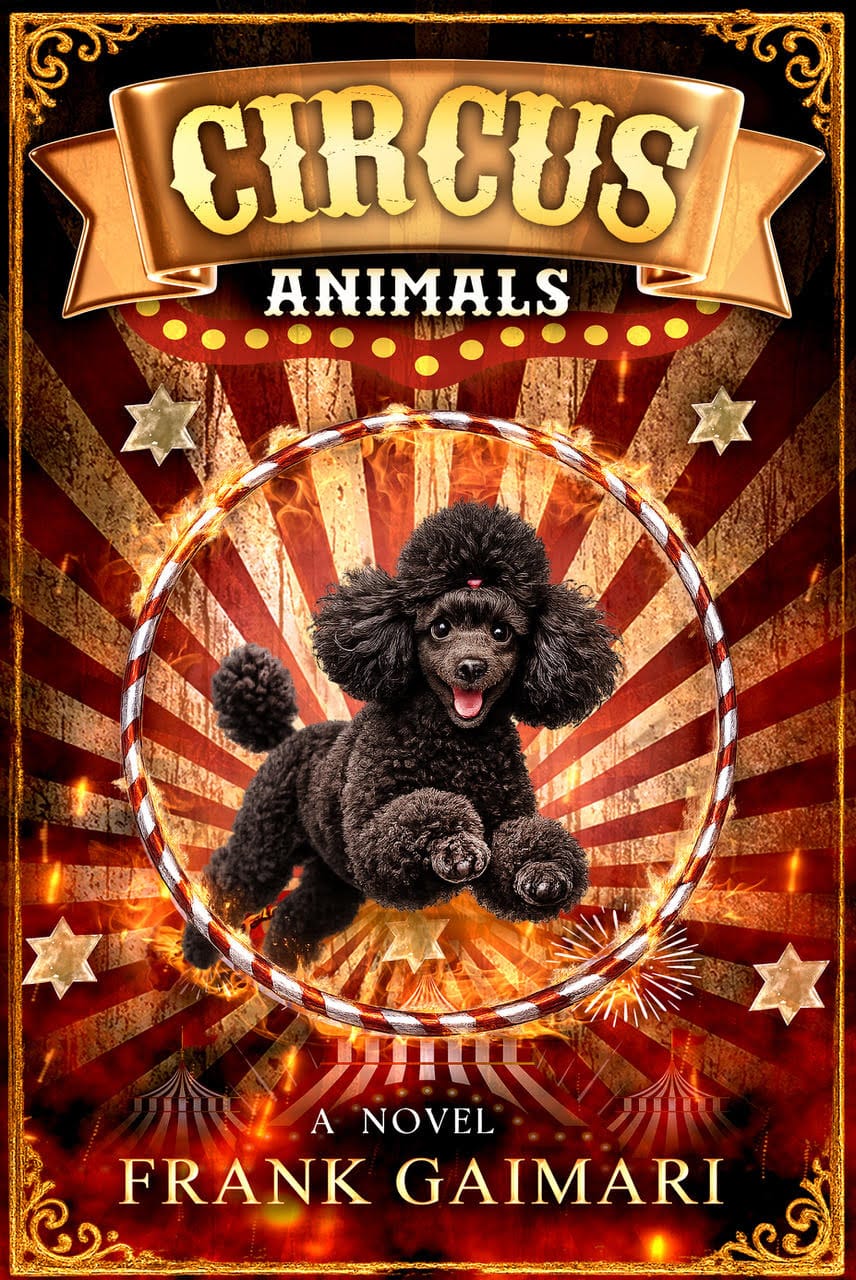

Frank Gaimari, a Seattle-based writer, has made a striking debut in the literary scene with his novel, Circus Animals. The book is a heartfelt and imaginative tale that blends adventure, emotion, and social commentary. Set against the vibrant, mysterious backdrop of New Orleans, the story follows a group of circus animals on a brave quest to free a lioness and her cub from the clutches of ruthless carnival workers. The richly developed characters — from the courageous elephant to the flamboyant mouse — each bring charm and complexity to the narrative. At its core, Circus Animals explores friendship, unity, and resilience while shedding light on the darker realities of animal mistreatment. Gaimari’s vivid storytelling and emotional depth create an enchanting yet thought-provoking experience that has captivated readers of all ages.
Conceived initially as a screenplay, Gaimari’s story has evolved into a richly crafted novel, earning widespread praise from critics for its depth and compelling narrative.
However, the novel is more than just a thrilling adventure. Through a vivid exploration of life under the big top, Gaimari reveals the reality behind the glamorous facade. “The circus symbolizes so much,” he shares. “While it dazzles with lights and performances, there’s often underlying struggle, control, and exploitation.”
Gaimari’s path to turning Circus Animals into a novel was anything but traditional. His screenplay received praise on the festival circuit for its rich narrative and dialogue, yet Gaimari felt there was more to explore than a script could allow. “Screenplays put tight constraints on storytelling,” he reflects. “I wanted to dive deeper into the characters, the world, and the emotions driving this group of animals.”
The following are questions I had the opportunity to ask the author.
Lyndal Simpson: Circus Animals started as a screenplay. What inspired you to turn it into a novel?
I’ve always enjoyed writing in different forms, and Circus Animals was a story I really believed in. As a screenplay, it got great feedback, which meant a lot to me. But I also knew how difficult it can be to sell a script, so I started thinking about other ways to keep the story alive and share it with more people.
Turning it into a novel felt like the natural next step. It gave me the chance to go deeper into the characters, the world, and the emotional heart of the story in a way that was really satisfying.
It was definitely a different challenge from screenwriting, but in many ways, it was even more rewarding. Writing the novel let me connect with the story on a more personal level and give it the attention it deserved. I’m really glad I made that choice.
LS: The story follows an unusual group of circus animals on a daring adventure. What sparked the idea for this narrative?
FG: I’ve been an animal lover my whole life, and I honestly can’t remember a time when I didn’t have a pet by my side. They’ve always been an important part of my life. When I started writing Circus Animals, it felt natural to make them the foundation of the story. I based the main characters on my own pets — each one inspired by a real personality I’ve known and loved over the years.
Some of my pets are still with me today, curled up nearby as I write. Others have passed away, and I think about them every day. Much of the emotion in this book comes from those memories. Writing them into the story was my way of keeping them close and honoring their presence.
This novel became a way to preserve their memory. As long as people read it, I believe their spirits continue to live on. Their unique quirks, their energy, the way they made me feel — it’s all captured on the pages. More than anything, this book is a tribute to them.
LS: The novel tackles animal mistreatment and exploitation. Why was it necessary to explore these issues?
FG: Too many animals are subjected to neglect, cruelty, and exploitation in ways that often go unnoticed or unchallenged. I felt it was important to include these issues in my story because bringing them to light can help readers understand the realities many animals face. By addressing animal mistreatment and exploitation directly, I hoped to encourage empathy and inspire action.
LS: What challenges did you face when transitioning from the structured format of a screenplay to a novel?
FG: Transitioning from screenwriting to novel writing has been a transformative experience. In screenplays, precision is key. Every word needs to serve a specific purpose. However, novels provide the freedom to explore settings, characters, and emotions in greater depth. My biggest challenge was retraining my mind to embrace this newfound freedom and letting go of the instinct to be overly restrained.
LS: The characters feel vivid and relatable. How did you bring them to life and give each one a distinct personality?
FG: I find great joy in creating captivating characters. Take Morton the mouse, for example — he’s dramatic, flamboyant, and impossible to ignore. His personality truly brings the story to life. Then there’s the ringmaster, whose authoritative behavior creates havoc in the narrative. Each character I create is a vital part of the story, and their unique traits weave a memorable element into the plot.
LS: Why did you choose New Orleans as the setting for your book?
FG: I chose New Orleans because of its unique atmosphere and the way its history and culture are so intertwined. The city’s mix of French, Spanish, African, and American influences gives it a richness that’s hard to find anywhere else. The music scene adds an energy that really brings the city to life, and the food reflects a deep sense of tradition and creativity. What I find fascinating is how the city has always been about resilience and reinvention, which gives it a sense of depth that felt perfect for the story I wanted to tell.
LS: Would you describe Circus Animals as a Queer book?
FG: Circus Animals touches on LGBTQ+ themes in a way that feels authentic to the characters’ experiences. One of the main characters has strong feelings for his best friend, adding emotional depth and highlighting the complexity of their relationship. Another character starts out shy and unsure of himself, but as the story progresses, he undergoes a real transformation — growing more confident and self-accepting. The book doesn’t focus on labels or make these themes the main point; instead, they’re woven into the story as a natural part of the characters’ journeys.
LS: Who is the intended audience for this book?
FG: While I primarily wrote this book with young adult readers in mind, I believe its themes and characters resonate beyond that age group. The story touches on universal experiences like friendship, self-discovery, and embracing who you are — elements that resonate with anyone.

Gaimari captivates readers with Circus Animals, featuring well-developed characters and intricately woven plots. If you’re looking for an escape, this book is for you. It’s available online and at local bookstores everywhere, including Amazon.
Lyndal Simpson is a multi-award-winning screenwriter with two movies currently in development. She lives in Melbourne, Australia, with her husband and two teenage sons.