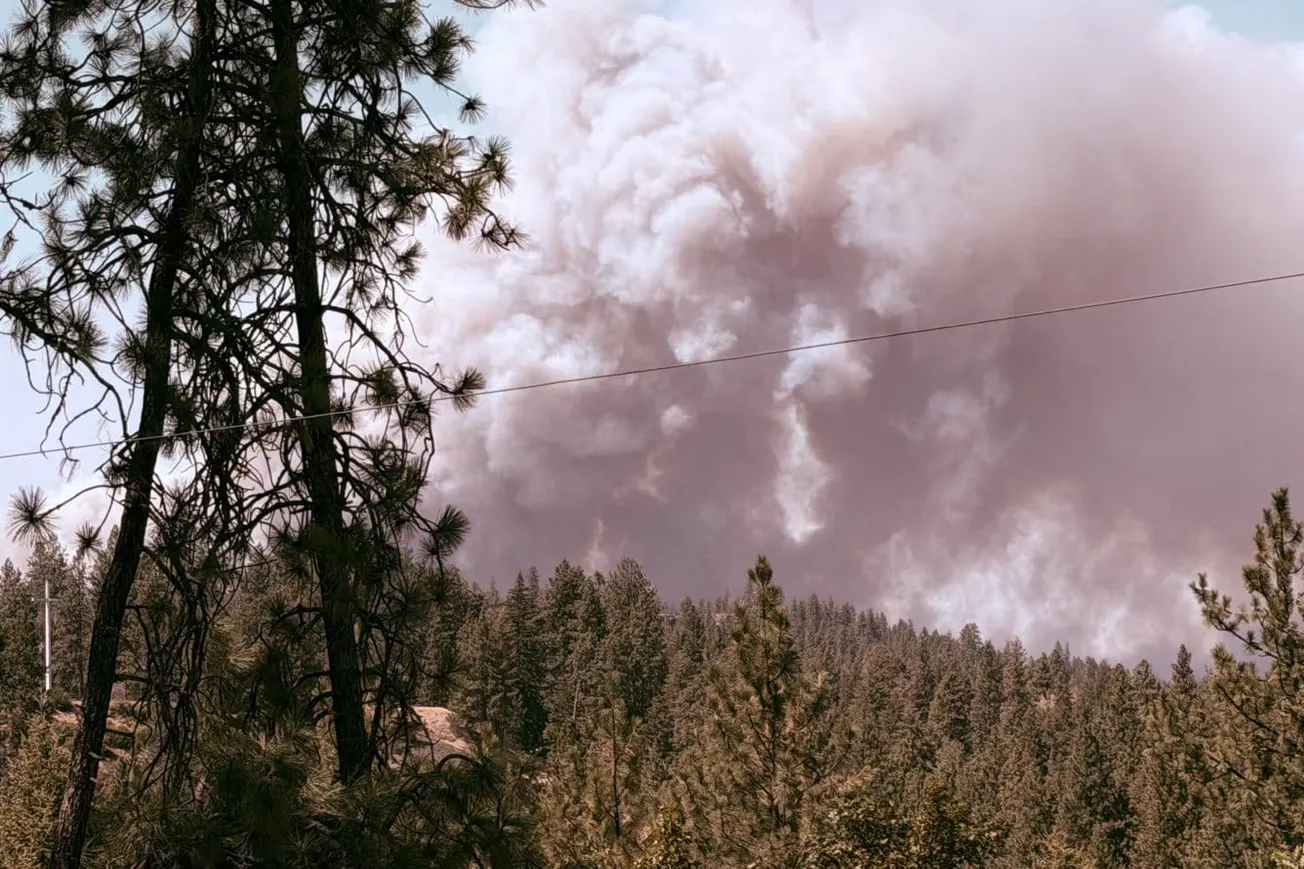
March at the mountain ranch is not a soft awakening. It is an active negotiation. One morning the ground loosens and trees start to bloom. The next morning, it locks itself under snow again in a final act of winter defiance. We refer to March as the season of Sprinter: not quite Spring, not quite Winter. This is the time of year when our mountain weather is chaotic. It is not the Fall monsoon, it is the Spring thaw. That Spring transition is rarely tidy. As Spring rolls on up the rugged mountain elevations, it is a test of what held.
After months of national turbulence, the season of Sprinter reminds me to be less reacting and more rooting. Not digging in with stubbornness but grounding with intention.
Years ago, when the ranch became both home and business, my world narrowed geographically and widened ecologically. I joked that I was a monk in a monastery, but what was really happening was an apprenticeship with nature. When you spend most of your days on one piece of land, the land begins to tutor you.
Patterns emerge; not mystical ones—observable ones. The angle of light shifting just enough to signal certain plant and insect activity. The subtle change in bird calls and frog song before weather turns. The way certain plants, like dandelion and native plantain, volunteer precisely where soil has been disturbed, quietly doing repair work. The way different insects roll out at different times across Spring and Summer, usually in tune with the lunar cycle. Over time, those observations stopped feeling like studying and started feeling like fluency.
The rune Hagal, associated with disruption, is no abstraction when Spring hail flattens the garden starts, or a sudden snow event covers the fruit trees trying to bud. Hagal’s symbolism has been one of the ranch’s most enduring Spring lessons: a meadow ecology is about balance not stasis. It is about nature’s responsiveness to hail and snow events. Spring is when that symbolic disruption turns into work to prepare the ground.
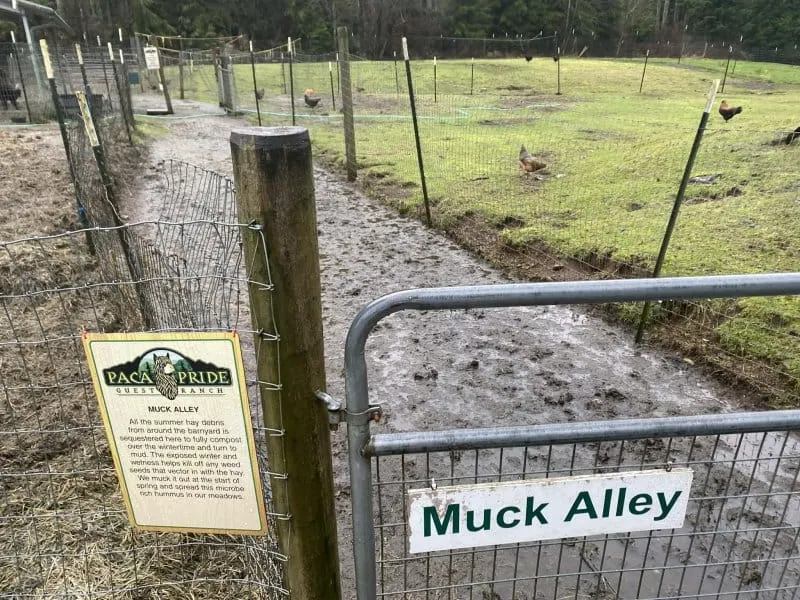
Every year about this time we reset our intentional mud-making effort, Muck Alley. For most of the year, the alley accumulated the waste hay tailings from around the barnyard. The herd passed through it daily, adding their own contributions. Worms move in and good microbes develop. Winter freezes and thaws did the patient work of composting weed seeds that vector in with the hay.
What begins as waste slowly becomes something else.
By early spring, the alley has transformed itself into a living compost: dark, rich material built through the dormancy of winter. It is our tilth bank account waiting to be withdrawn.
So when the ground begins to wake up, we muck it out. We harvest the last year’s accumulation and spread it across the meadow pastures, especially in the bright green spots where moss has tried to take hold. The result is not instant transformation, it’s momentum, a toehold for tilth to build. Organic matter builds soil structure. Worms and microbes move outward. Grasses and clovers find footing where gravel once dominated. What once looked like waste becomes the foundation for another season of life.
Resetting Muck Alley each spring is one of those rituals that reminds me of what building a legacy actually looks like. It isn’t a dramatic production, it’s cyclical. You build something up for a year, return it to the land, then you begin again.
Legacy building is rarely a monument. More often, it is a process that keeps giving long after the original effort is forgotten. The same principle applies beyond the ranch. In chaotic times, the loudest voices insist everything must change overnight. But anyone who has ever built soil knows better. Real resilience happens incrementally. It’s a quiet work accumulating until suddenly the system is stronger than it was before. The Spring rollout models that patience.
Amending the ground becomes a sacred act.
Grounding, in that sense, is not a withdrawal from the world. It is the preparation needed to stand within it. Nothing green breaks the surface until the root system is ready. Out here on the mountain plateau, spring doesn’t erase winter. It metabolizes it. The muck becomes soil. There is no applause for that work. Yet without it, visible growth would collapse at the first Sprinter disruption.
And maybe that’s the deeper lesson this season offers.
Communities grow the same way landscapes do—through care, through repetition, through the willingness to transform what others discard, into something fertile. Queer spaces, chosen families, rural sanctuaries like this ranch—they don’t appear overnight. They are cultivated year after year, often quietly, often outside the spotlight. Sometimes it’s nothing more glamorous than shoveling muck.
Resilience is not simply surviving the winter.
It’s preparing the ground for what comes next.