Table of Contents
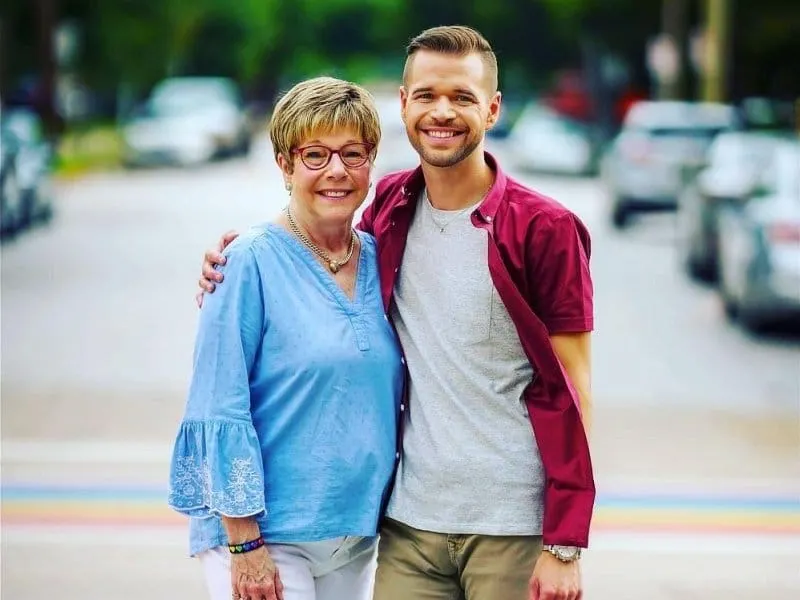
When Liz Dyer talks about Real Mama Bears, she doesn’t describe it like a nonprofit. She talks about it like a kitchen table—one that keeps expanding as more chairs are pulled up, more stories spill out, and more mothers recognize they’re not alone. What began in 2014 as a private Facebook group for moms of LGBTQ+ kids has grown into a global grassroots movement serving more than 100,000 families each year. And the foundation hasn’t changed: mothers who are fiercely committed to making the world safer for their kids.
“Support, educate, and empower”—that mission was there from the start. “I really believe that a mother’s love can change the world,” Dyer says. “And—as the families go, so goes the world.”
Today, Real Mama Bears includes more than 60 chapters across the United States, Canada, the UK, and Australia. It remains rooted in maternal love, but the community has expanded to include allies, queer parents, and even members who realized—through supporting their children—that they themselves were nonbinary or trans. The name “Mama Bears” wasn’t even strategic. “We landed on the name accidentally—it grew out of the community,” Dyer says. “We do not want to exclude anyone <3.”
Seeing the Pattern—and Breaking It
Across decades of political cycles, Dyer noticed the same harmful playbook:
“Take a marginalized group.
Portray them as a danger to kids or families.
Use fear-based messaging to gain political ground.
Let real people suffer while the headlines and campaign ads roll in.”
The current wave of anti-trans legislation is part of the same pattern. But Dyer sees cracks forming. “As visibility grows and as more people get to know transgender individuals in their own families and communities, fear loses its grip.”
Real Mama Bears exists to accelerate that loosening—not through think tanks or lobbying machines, but through the radical, ordinary acts of care that queer people have always relied on.
“Advocacy work can be a bandwagon,” Dyer says, “but that is not the case for moms. Moms for LGBTQ+ kids continue to do the work for the rest of their lives because of the world we live in. We want people to live wholeheartedly.”
From Conservative Christianity to Community Builder
Before becoming a movement leader, Dyer was a Southern Baptist Bible study teacher, writing curriculum and speaking at women’s events across Texas. In 2006, her son came out as gay at age 19. The world she knew shifted instantly.
“I didn’t have a lot of foundation for what to think,” she recalls. “Being a woman of faith, the first thing I did was look at the Bible.” But the verses used to condemn LGBTQ+ people described acts like worshipping fertility gods through temple orgies—“nothing related to my son.”
So she broadened her search. “I read books, went to meetings, sought out resources. To do what’s best for my son, I need to keep an open mind. I need to do the right thing for my kid.”
Listening to LGBTQ+ people ultimately changed everything. “When I looked at LGBTQ+ people who were living their authentic lives, they were healthier in every way than people trying to repress their identity.” She knew she wasn’t the only mother in need of this clarity, so she began blogging in 2010. Parents found her. The community grew before the organization even existed.
By the time she formed the Facebook group in 2014, it was already national.
Mothering as Community Practice
One thing sets Real Mama Bears apart: it is built on the instinctive drive of mothers to protect their children and each other. Dyer also recognized that mothers and fathers often needed separate spaces. “A lot of cisgender dads are slow to come along or never come along,” she says. “It would mean the mom wouldn’t have the space to share and get resources. Parents need to go on their own journeys.”
All programs emerged from listening to what the mothers themselves wanted to do.
The Blanket Project began because moms wanted LGBTQ+ youth to have something tangible—soft, warm proof that someone cares.
Mama Bears to the Rescue grew from the desire to show up physically when queer youth were targeted. Early in the project, the group supported a young trans girl elected to her high school homecoming court as a joke. When parents pushed for a re-vote, the Mama Bears stepped in. They helped her choose a dress, did her makeup, and ensured her family felt surrounded with love on a night meant to humiliate her.
This is mothering extended beyond the home. Mothering practiced as mutual aid. Mothering as survival and resistance.
Real Mama Bears also emphasizes advocacy, not just support. “We never want to speak over people in the community,” Dyer explains, “but the reality is that in some places we need hetero straight cis people to speak up on behalf of the community. Sometimes it just isn’t safe for someone in the community to show up and we must keep that in mind.”
A Movement That Continues to Learn
Real Mama Bears adapts constantly. “We are constantly learning,” Dyer says. “Over the years we have adapted language and continued to improve as we have learned.” Programs evolve or sunset depending on the community’s needs, especially as trans people continue to be used as political pawns.
The Giving Circle—Real Mama Bears’ grantmaking arm—has distributed more than $450,000 in the last three years to nonprofits serving LGBTQ+ communities. “We give away more money than we take in,” Dyer notes. Funds are managed through Pure Charity for transparency.
Soul Force and a Viral Moment
The Soul Force project recognizes individuals, churches, artists, and institutions that uplift LGBTQ+ people. One mom suggested writing to Schitt’s Creek; the show’s publicist agreed to pass the letter to the cast. They read it on camera during the Season 6 special.
The clip went viral. Thousands reached out. Meta took notice and accepted Real Mama Bears into a nine-month accelerator with a $50,000 grant—offering operational skills without changing the movement’s heart.
“Moms trying to keep queer people alive.”
That’s how someone once described Real Mama Bears to Chasten Buttigieg. Dyer embraces the sentiment. “We are never trying to take the place of anyone’s parent,” she says. “What we can do is be a loving presence in someone’s life.”
And maybe that’s why the movement continues to grow: because mothering—real mothering—is a radical act. It is the oldest form of community care. It is sustainable, fierce, adaptable, and contagious. And when turned toward protecting queer youth, it becomes a force big enough to change the world