We wanted our son to understand, from the beginning, that he is not the center of the world — he is part of it. That he is a steward, not an owner. We took him to Kamiak Butte to say so out loud.
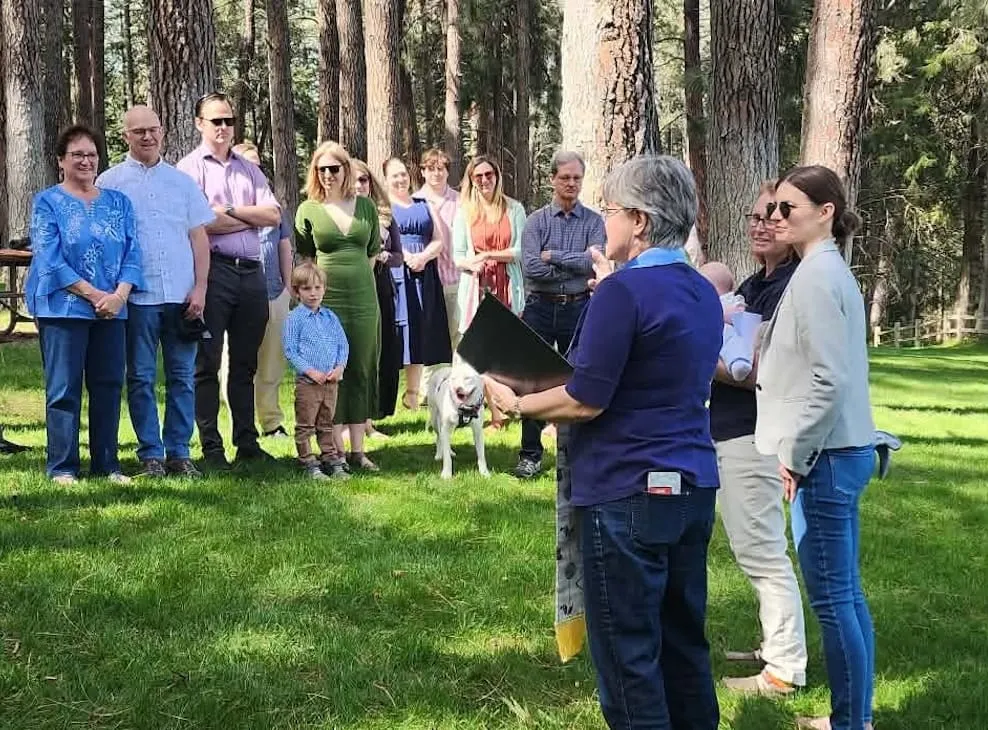
My wife and I have hiked Kamiak often over the years. It's our place. But we hadn't made it up there much since Stanley arrived. So last month we brought him, along with the people who love him most, and we baptized him into all of creation.
There was no traditional creed or liturgical call and response — but there was a pastor. The Rev. Andy CastroLang married my wife and me. She officiated at the wedding of two women who couldn't have legally married in Washington just a decade before that. Now, a couple of years later, she stood with us on a butte that rises out of the Palouse — a reminder that this land has its own memory — and she baptized our son.
Queer families know something about finding the sacred outside the walls that once shut us out. We've had to. We've built ceremonies out of necessity and out of love, in backyards and on hilltops, with pastors who said yes when institutions said no. Kamiak felt like that kind of place. The ponderosa pines have stood on that butte long enough to have witnessed everything — including the people who had to seek their holy ground elsewhere. Beneath the surface, they're still talking to each other about it.
It seemed like the right place to welcome a baby into the world.
Raising a child has a way of forcing the question: What do you actually believe? Not what you were taught, not what you've defended — what do you hold onto when you're holding him? For two queer women who have both found and lost faith communities, the answer is something woven from long walks in the Palouse and a faith that's still finding its shape. It doesn't fit neatly into any one vessel. But it holds. And I wanted Stanley held by it, too.
Not bound by it. Held by it.
The ceremony was simple. We spoke words of him — beloved, curious, tender, rooted, free — and we meant every one. We asked the people present to witness his arrival into this community and this place: the ponderosa pines, the basalt canyons, the wheat fields, the rolling hills just outside our door. We poured water, because water means life, and because even outside doctrine, some symbols need no explanation.
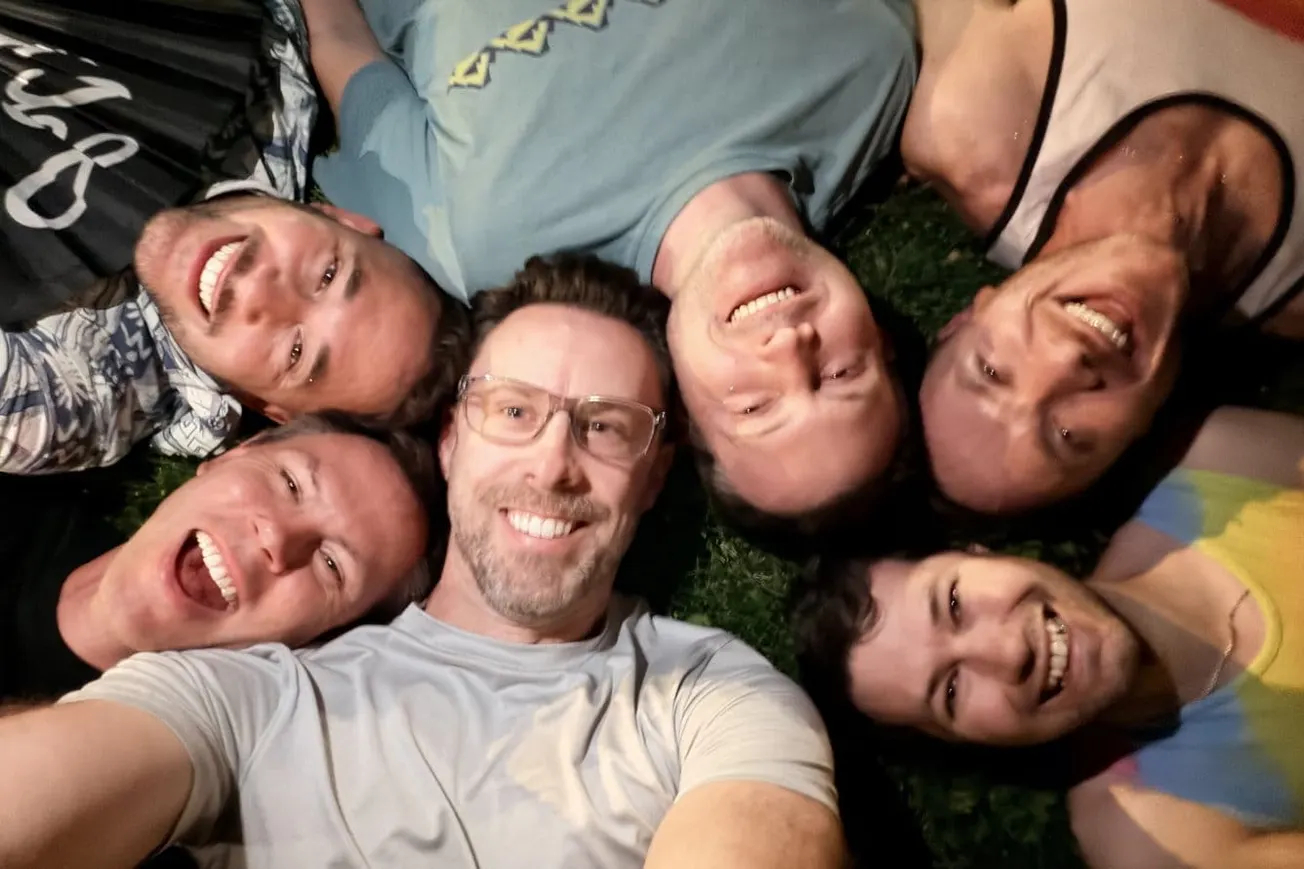
After the ceremony, we caravanned back to our house — the one with the chickens and the bees and the dogs and not nearly enough chairs. Then we ate, and the people who had just made a vow to Stanley got to actually be together — which felt like the point.
There's something queer families understand viscerally about chosen community: it isn't a consolation prize for the biological or religious ties that frayed. It's a different kind of covenant, made intentionally, by people who chose one another. The guests who climbed that butte weren't there out of obligation. They were there because they meant it.
I didn't want to give Stanley a checklist or a creed. I wanted to give him a disposition — toward the world, toward other people, toward the kind of faith that makes room for mystery. And I wanted him to grow up knowing that his family is proof that love takes many forms, and that the sacred can be found in all of them.
We want Stanley to grow up knowing that wonder is a form of faithfulness. That paying attention to a wheat field or a bee or a stranger's story is a spiritual act. That the sacred isn't somewhere else, waiting to be accessed through the right ritual — or the right family structure. It's here. It's the Pacific Northwest. It's the people who drove hours to stand in our backyard and say, yes, we'll be part of this child's life.
That's a key part of a baptism, isn't it? A community saying: we see you, we claim you, we'll show up. For LGBTQ+ families, that claiming has rarely come from institutions. It has almost always come from people. The theology can vary. The commitment is the same.
As we said at the ceremony, "We want Stanley to inherit our questions without inheriting our fears. We want the people gathered on that butte to be around long enough to embarrass him at graduation and cry at his wedding."
Whatever that wedding looks like. Whoever he is.
We want him to know he is loved — not for what he becomes, but for what he already is.
That felt worth gathering people for. That felt worth calling a sacrament.