We’re lonelier than ever, and it’s killing us.
We’re forgetting what community looks like—just when it’s what will save us. But community isn’t found in another app- it’s found on the front porch, at a coffee shop, or out on the kickball field.
After a recent talk I gave, I closed by encouraging the audience to find or build their community. I defined community as chosen connection—a space that doesn’t erase differences but weaves them together into something stronger. A place where we give, receive, and grow.
Afterward, a woman approached me to say she was required to go into her office twice a week, so she saw people there—“That’s my community,” she said.
I asked, “Are they people you feel connected to? People you grow with?”
She paused, smiled sadly, and said, “No, but that’s what we have to settle for these days, right?”
I spoke to a group of college students and asked what their communities looked like. Over 60% mentioned some form of online or virtual group. These spaces have value, but they’re not replacements for face-to-face connection—the kind that feeds our nervous systems, grounds our hearts, and reminds us we’re part of something bigger than ourselves.
People are sometimes surprised to learn that I lean more toward being an introvert. Socializing has never come as naturally to me as it seems to for others. One of my best friends moves effortlessly between the most diverse social circles—remembering everyone’s name, their kids, their heartbreaks, their last adventure, even their favorite food—and connecting with each person as if they’re the only one in the room.
I’ve always admired that, but years ago I realized something that changed how I see connection: every human carries a piece of life’s giant jigsaw puzzle. Each time I have the privilege of meaningfully connecting with someone, I get to glimpse their piece and share mine—and together, the bigger picture becomes just a little clearer.
That realization has shaped the way I build community. None of us hold the full image, but together we can build out an entire corner of it—maybe a horse, a tree, or a waterfall—and begin to see more of what life truly looks like. Community gives us that chance. It’s how we begin to understand the picture we’re all a part of.
For my husband, Rob, and me, building community used to be something we chose to do. Now, it feels like an act of survival. The world can feel heavy and isolating, but gathering with others—laughing, playing, connecting—has become our antidote.
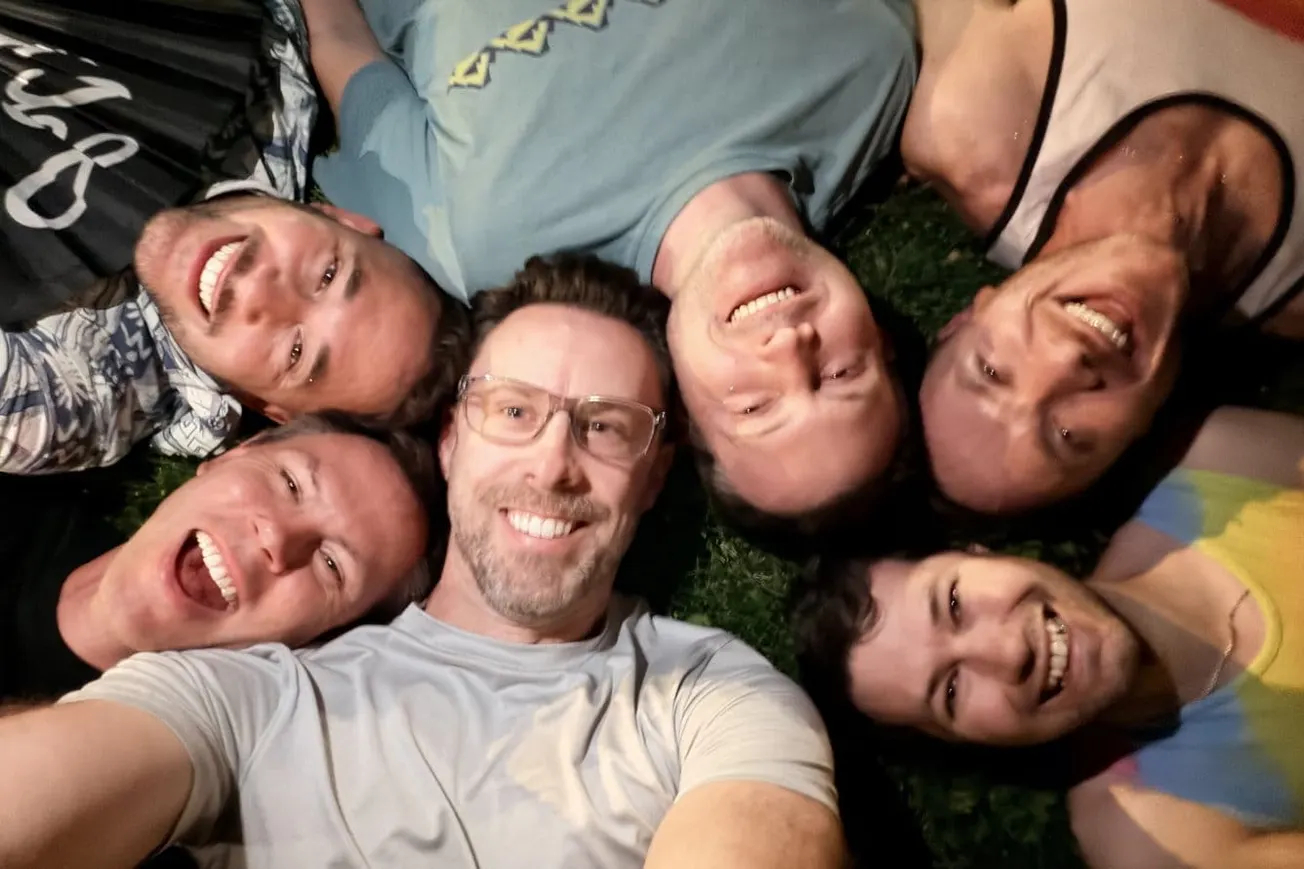
Rob, affectionately known as “Coach Rob,” leads the Short Shorts Kickball and Dodgeball Leagues. Twice a month, we throw on our shortest shorts and join others to kick or toss balls around a Spokane park or gym. We don’t keep score. We mix up teams. We high-five, heckle, and laugh until our sides hurt.
There’s the emergency room doctor—competitive, hilarious, and sharp as a tack. The mail carrier who never misses a game and always shows up smiling. The investment banker who seems determined to break the world record for shortest shorts—and his pharmacist boyfriend who’s there to call him out. The professor who knows every rule we happily ignore. The policy analyst whose quiet wisdom grounds every conversation. And the potter’s assistant—a friendly force of nature who gives some of the best hugs you’ll ever receive.
And so many more.
For a few hours, we forget our titles, politics, and worries. We’re just humans—playing, sweating, connecting.
Every Saturday, Rob and I co-lead a Front Runners & Walkers group that ends with coffee and camaraderie after shared miles on Spokane’s trails. On our back patio, we host gay movie nights, where laughter and popcorn spill into the cool evening air.
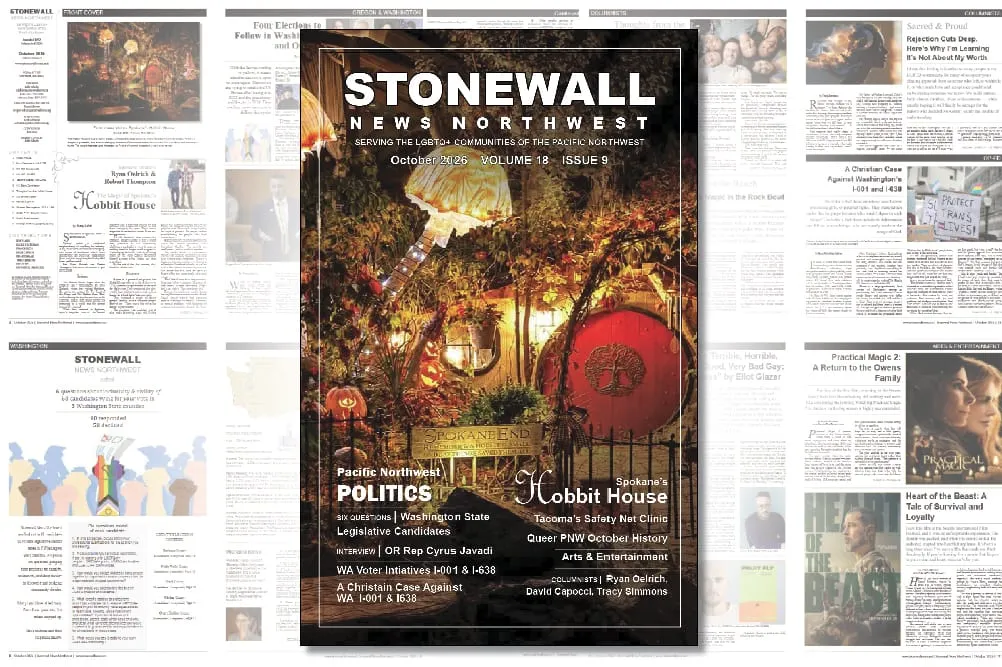
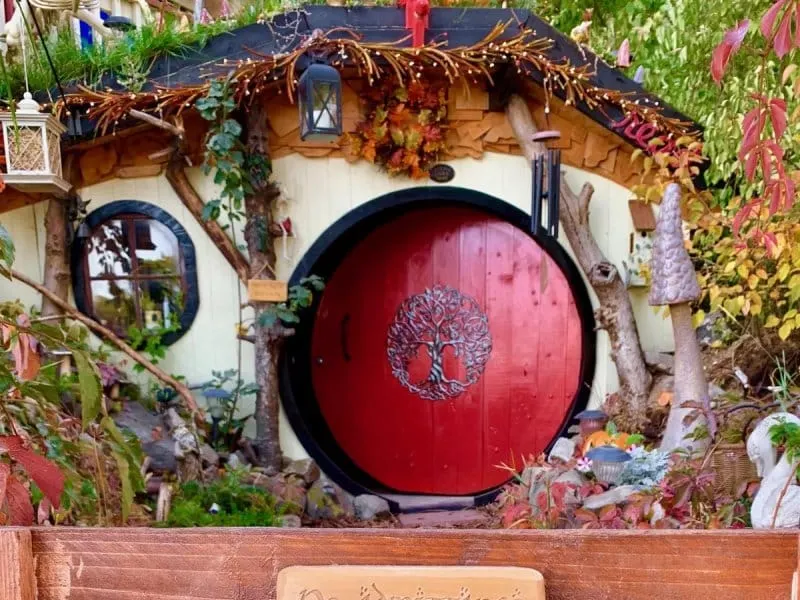
And this time of year, we bring Middle Earth to life. “Hobbit Halloween” has become a neighborhood tradition at our little Hobbit House—a home built into the hillside, complete with a round red door and a “dragon chute” for candy. Kids and adults alike come to trick-or-treat and “adopt” a dragon egg—each one hiding a tiny baby dragon inside. Friends and colleagues join us on the porch, mugs of cider in hand, as we drop dragon eggs to wide-eyed little ones below.
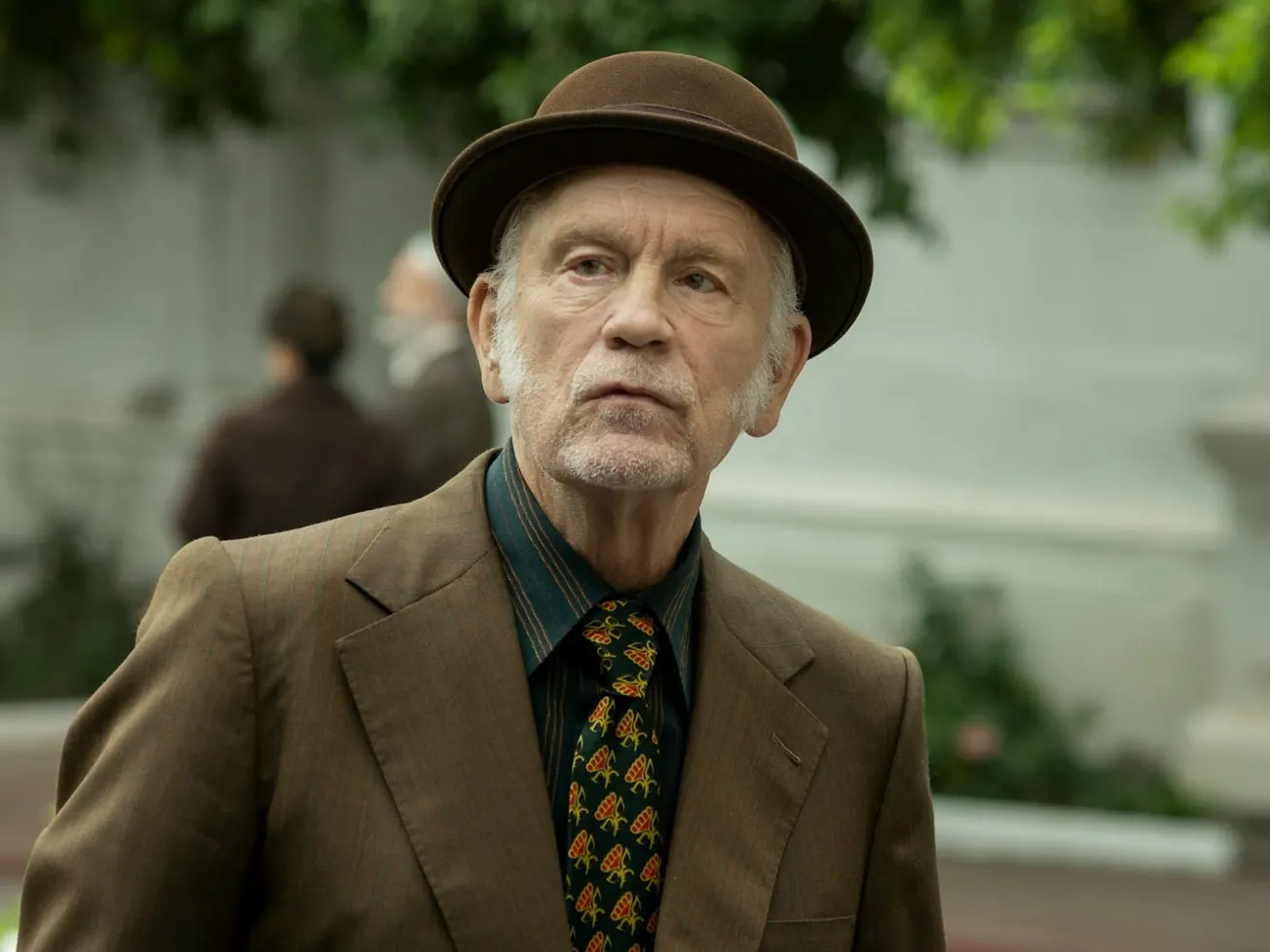
During one particularly busy evening, an elderly man approached me, clasped my hand, and said, “This little thing brings such big joy every year. Thank you for a wonderful excuse to come together.”
A wonderful excuse.
Community doesn’t have to be complicated. Sometimes, all we have to do is provide a wonderful excuse to connect.
It can be a lot of work. But it’s the kind that feeds and heals the soul.
Because these gatherings remind us of something essential: none of us are meant to do this life alone. In a world that feels fractured and fatigued, community remains our secret weapon.
Every time we sit shoulder to shoulder with others—on a porch, a trail, or a dodgeball court—we quietly rebuild something powerful: connection, belonging, and hope.
Because in the end, community isn’t just our secret weapon- it’s our shared heartbeat. And maybe, just maybe, that’s how we’ll save each other.