
Wenatchee’s interfaith “rainbow response team” counters anti-LGBTQ+ protesters at churches and Pride events with music and dancing, aiming to defuse tension through nonviolence.
This article is published through a content partnership with FaVS News, the only digital newsroom in America devoted entirely to local religion reporting.
When anti-LGBTQ+ protesters appear at churches and Pride festivals in the Wenatchee area, a group of interfaith leaders has a response ready: They dance.
“We bring a speaker, and we play music, and we have a dance party,” Sunnyslope Church Rev. Dane Breslin said. “It drowns out whatever harmful or hurtful thing is being said by the protesters.”
The rapid response group, which has been deployed several times, has been dubbed the “rainbow response team” and includes about 25 members, Breslin said. It exists in a group chat and, when the time is necessary, leaders show up with speakers, friends and a joyful attitude, turn on some Chappell Roan, and dance their hearts out.
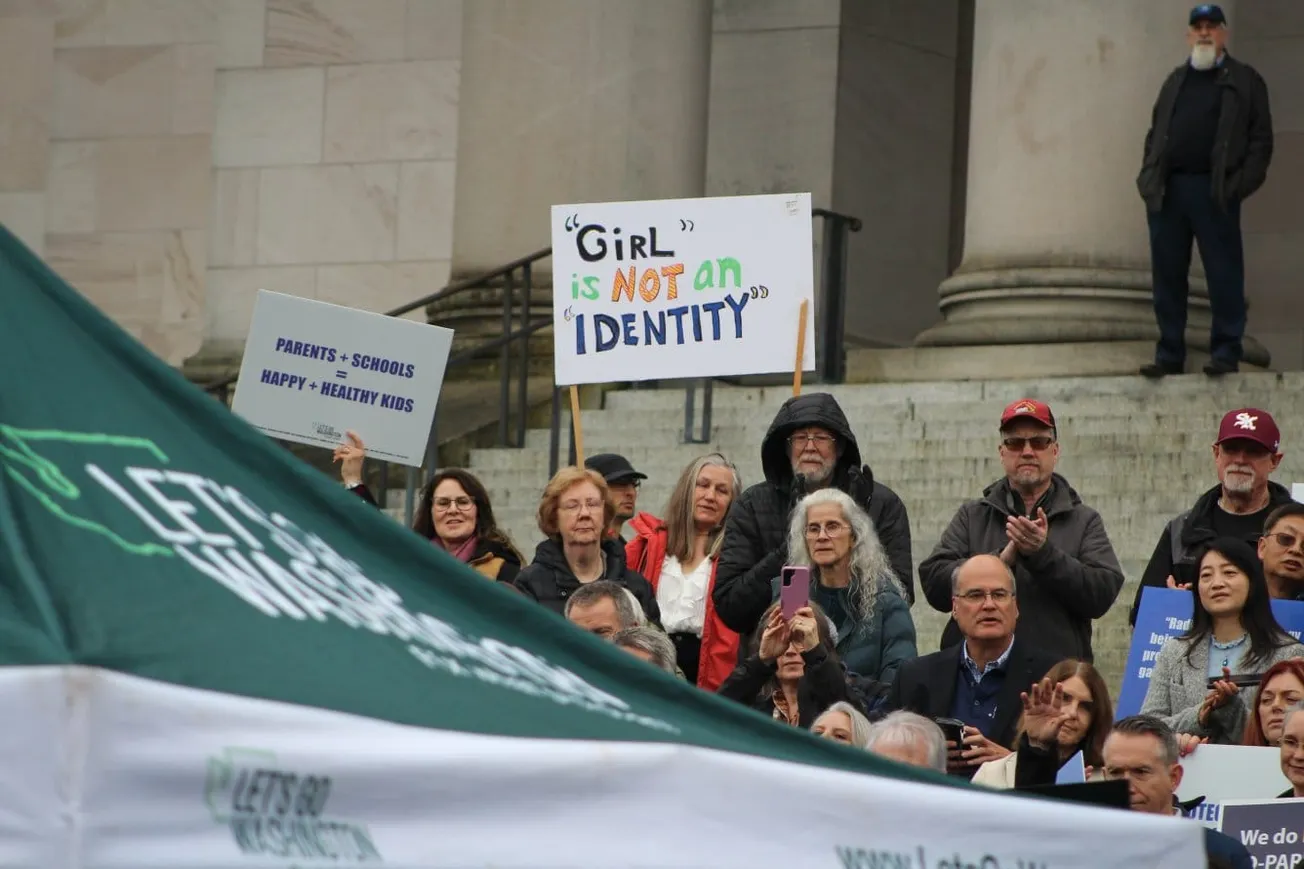
The rainbow response team was started when anti-LGBTQ+ Christian podcaster Dillion Pastors and a few others attended a clothing swap at the Sunnyslope Church last fall. They brought with them a loudspeaker and a microphone and were “preaching selective versus,” claiming the church had demons and was leading people astray, said Zoe Jaspers, the church’s education chair.

Wishing anti-LGBTQ+ protestors well
After a short bout of discussion, church leaders decided to get some music going and dance.
“Something that can kind of diffuse some of this energy,” Jaspers said.
The first song that came on, Jaspers remembered, was Jack Johnson’s Banana Pancakes.
“It took what was a pretty tense and scary moment and made it something that we can figure out how to roll with, and have compassion for the folks who wanted to kind of set themselves up in opposition,” he said. “We wished them well and we sang to them and danced, and it made it a moment for community.”
The next Sunday, after Pastors announced that he would be protesting New Song Community Church, interfaith members showed up, ready to provide a counter-message or a corridor so that people could peaceably attend their workshop service.
“There was no confrontation,” Andrea Despian, a member of The Church of Jesus Christ of Latter-day Saints and part of the rainbow response team, said. “He didn’t actually show up.”
By that point, however, the group had already laid the groundwork for the official creation of the rainbow response team.
The rainbow response team was also deployed at this year’s Wenatchee Pride, when a group of protesters set up shop in the center of the food court. Despian said the protesters brought a camera and anti-LGBTQ+ signs with them and seemed to be seeking conflict.
To counter this, the rainbow response dance team deployed and started blasting ABBA music.
“We just played music, and we just danced,” Despian said. Other people attending Pride also joined in, Jaspers said.
The counter-protesters eventually left, Despian said.
Responding with compassion
The rainbow response team and its emergency dance protocol are a way to introduce nonviolent strategies into a situation that otherwise could escalate and become confrontational, Breslin said.
“Hurt people hurt people,” Despian said, remembering some of the conversations that had started the rainbow response team. “We want to respond to this with compassion.”
One of the group’s missions is to live out principles of nonviolence, Jaspers said.
“Whatever our response is should be rooted in love,” he added. “If we say we’re committed to nonviolence and we say we were committed to the dignity of the human person, that includes all human persons.”
The rainbow response team and the strategies it uses are part of a larger movement by the Interfaith Justice Coalition to teach people how to deescalate situations, build relationships to combat anti-LGBTQ+ sentiments, and more, Breslin said. Over 140 people have been involved in that work, he added.
Although the rainbow response team hasn’t been mobilized often, the hope is that it will always stay in the ready, with planned strategies for how to address any organized anti-LGBTQ+ sentiments that may arise.
“Having the strategy already pre-talked about means that we have it in practice already,” Jaspers said. “It’s a lot easier to get into motion, because we already have done the movements of it.”