Table of Contents
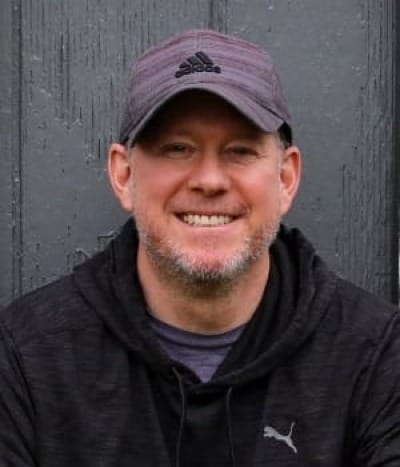
For Christopher Mathie, painting has always been a way of being fully alive. Since 1992, he has worked as a full-time artist, creating seascapes, abstracts, and explorations of the human form. His canvases are layered not only with color and texture, but with personal history—stories of queerness, courage, and self-discovery told through brushstrokes.
Mathie grew up in Blackfoot, Idaho, where art first came to him as play. He remembers asking his mom daily what he could make and rummaging through the kitchen drawer of supplies to build something new. That early spark turned into a lifelong pursuit, one that eventually carried him far beyond his small-town roots and into galleries across the country.
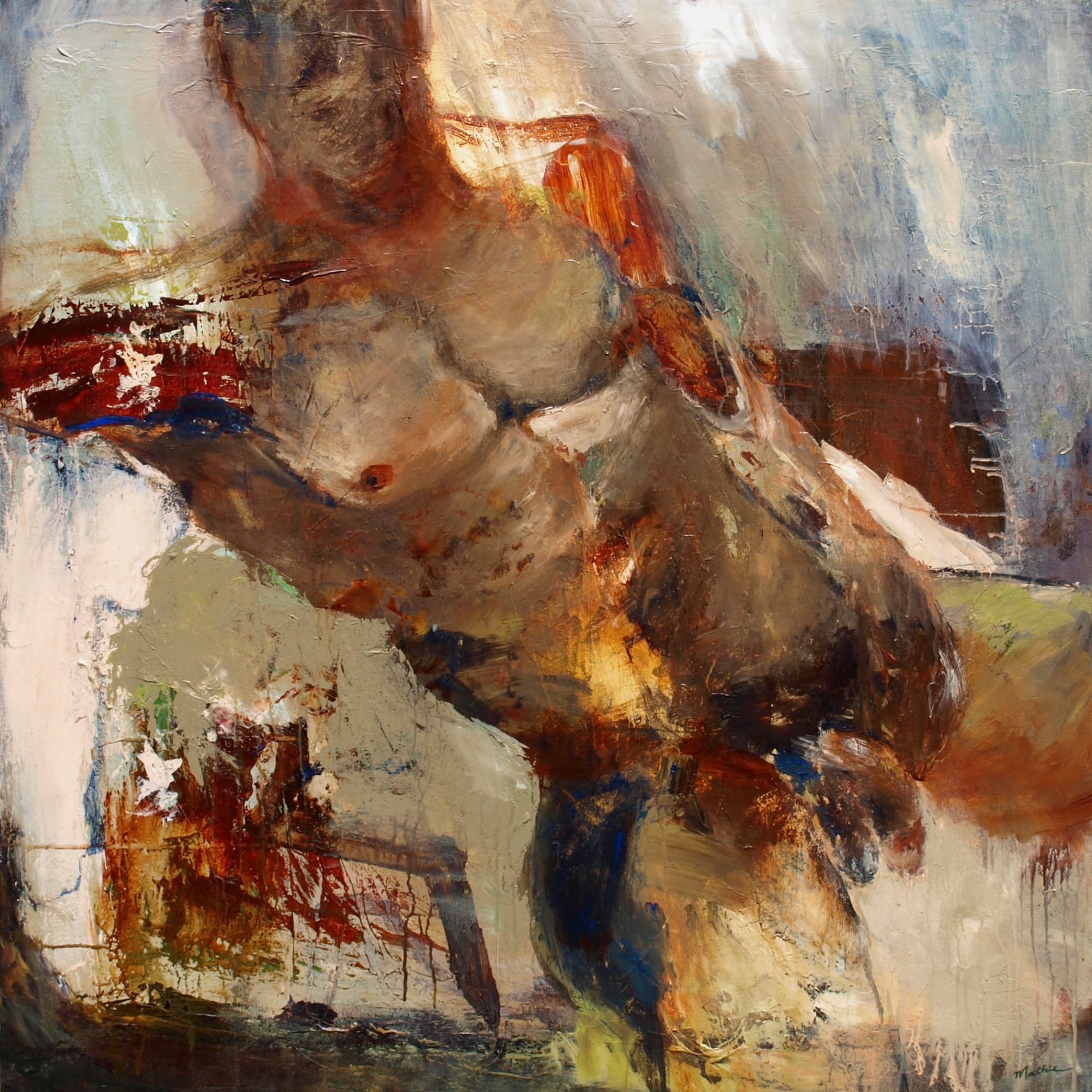
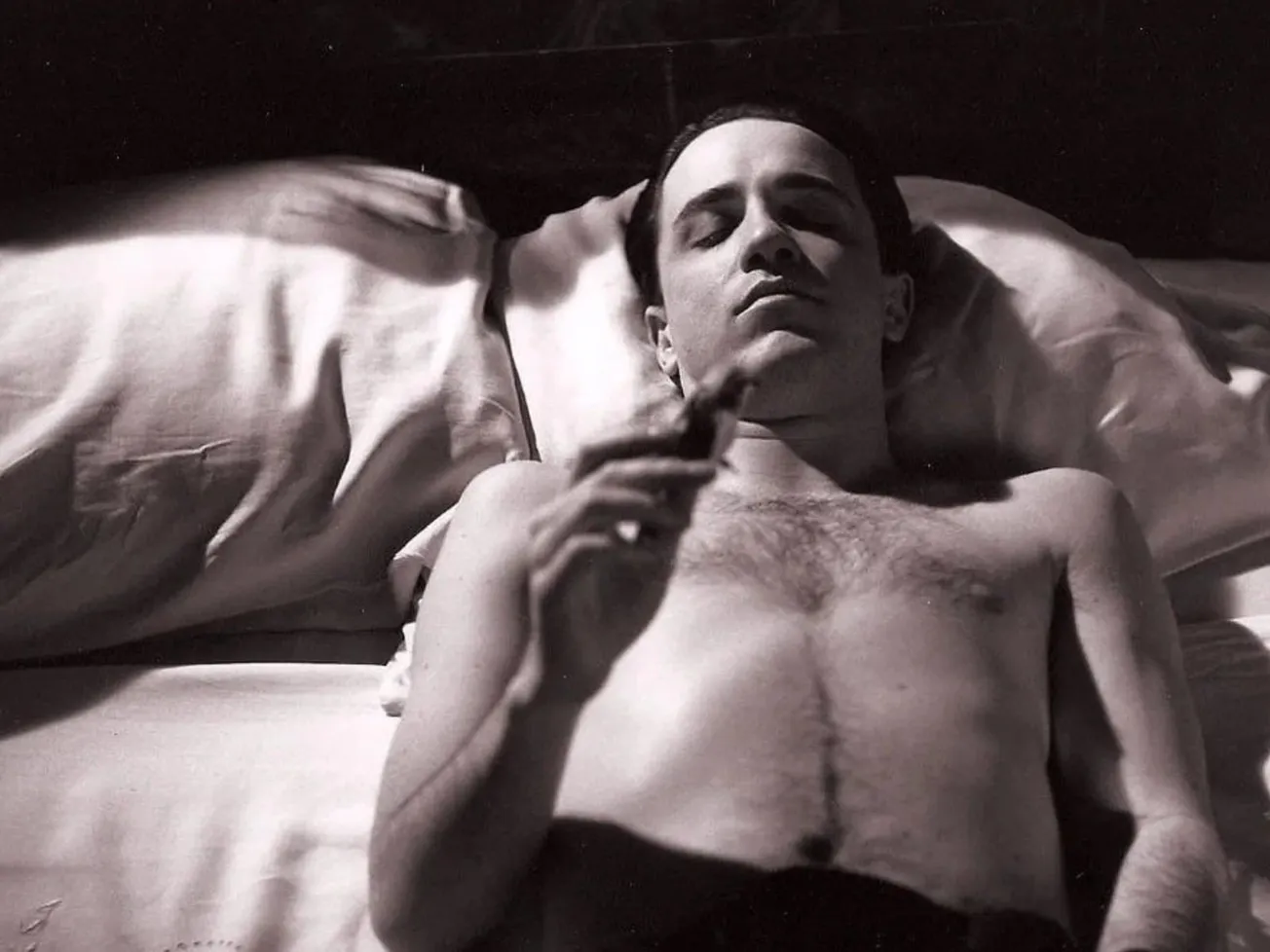
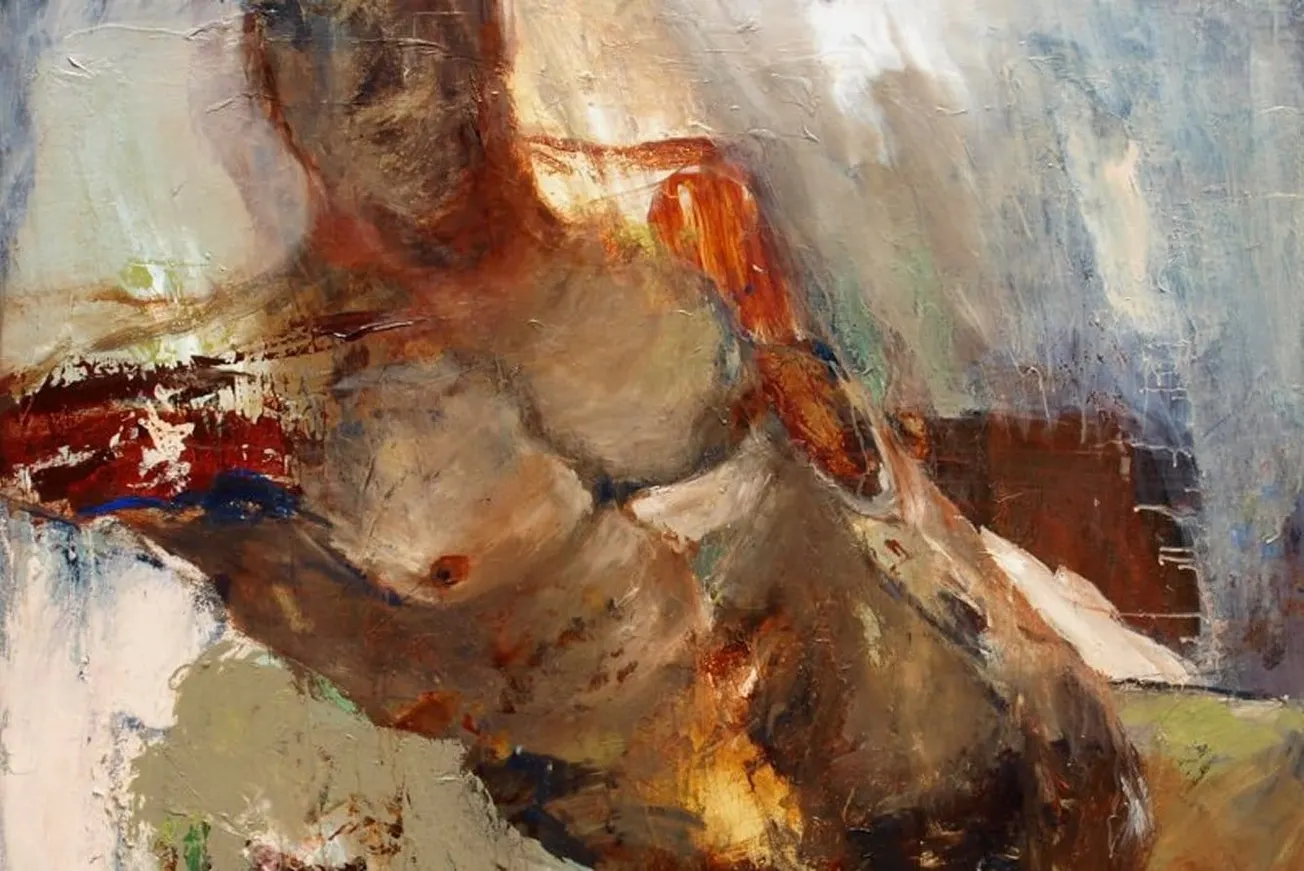
This painting was as part of a larger figurative show in 2012 at a gallery in Port Townsend called AOT (Artists on Taylor).
The show was called Conversation Pieces and had both male and female nudes. The show caused quite a stir with people praying outside the gallery at the opening. Someone went to the city council to get the show closed. And Twitter closed my account over the images, which were not sexual, only nude.
The work was done at a time when I was trying to understand my own identity and cope with a super conservative, religious family. I learned a lot from doing the work and the gallerist had many important conversations as a result with people who came to the show.
A Second Coming Out
For many years, Mathie’s paintings were “safe”—landscapes and seascapes that the art market welcomed. But in 2012, he shifted. With encouragement from Port Townsend gallery owner Anna Nassat, he began painting what he had long held back: full-frontal nudes and abstract, colorful depictions of the human body.
“This was a coming out for my art,” Mathie says. “I realized I didn’t have to hide. I could make whatever I wanted.”
The exhibition took place at Artists on Taylor (AOT) in Port Townsend, WA. Titled Conversation Pieces, it featured both male and female nudes. To highlight how far he had come, Mathie also included a self-portrait he had painted years earlier in college—a boy crouched with a shadow hovering behind his head. At the time, he thought the figure was a demon; now he recognizes it as fear lingering.
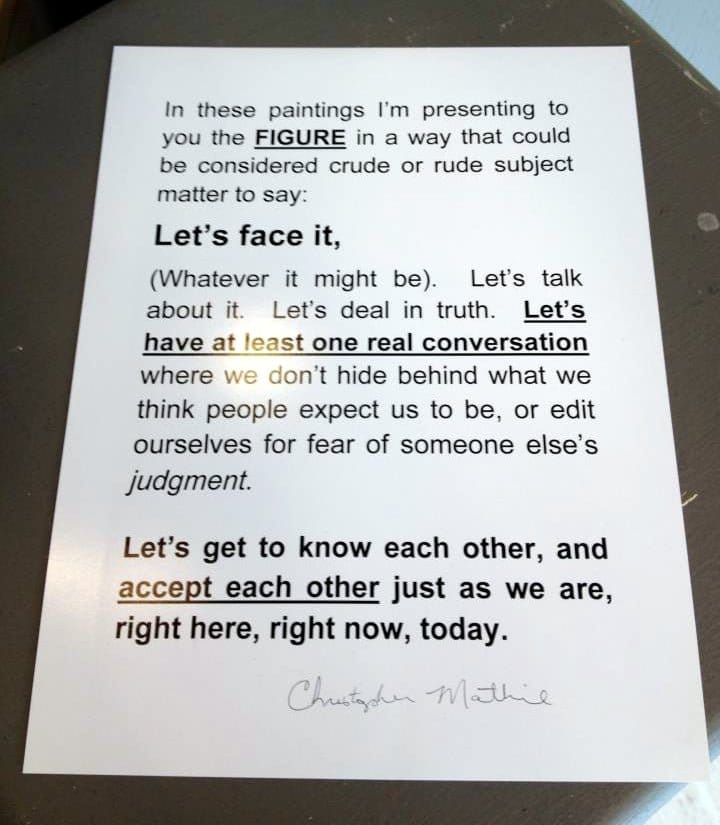
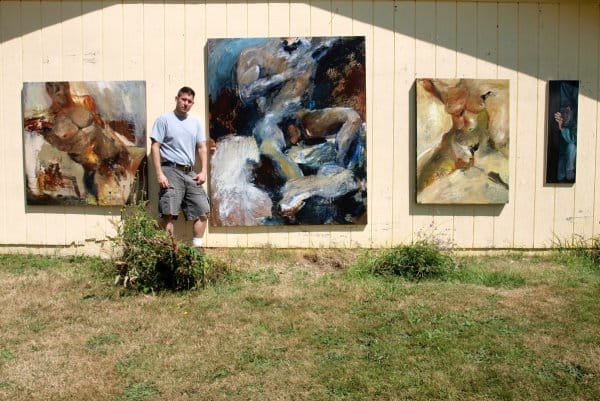
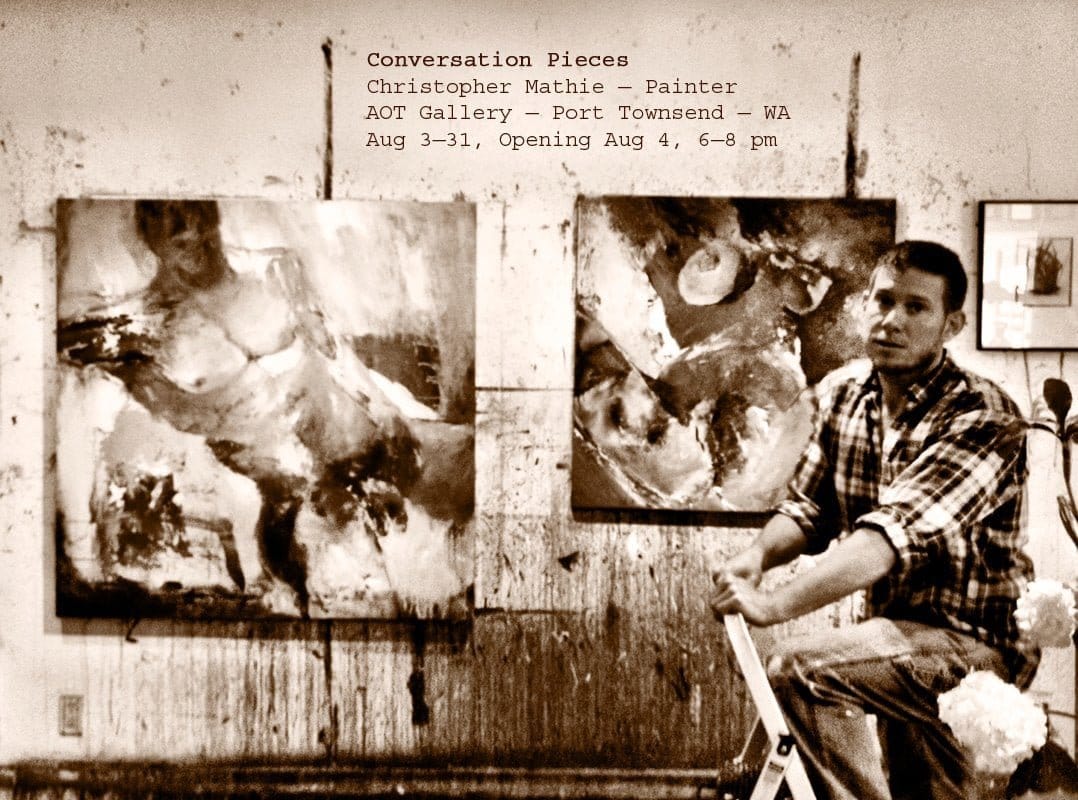
Some people prayed outside the gallery on opening night, and one person went to the city council in an attempt to have the show shut down. Inside, the gallerist fielded many conversations with visitors who came to see the work. Some wrote letters, and reactions ranged from resistance to deep appreciation. Two female ministers lingered in front of one of the nudes and said, “This is overwhelming and wonderful—to see a woman running a gallery where the man is naked on the wall.”
“Doing that work helped me get over my own hang ups,” Mathie says. “It was more pure. It was more me.”
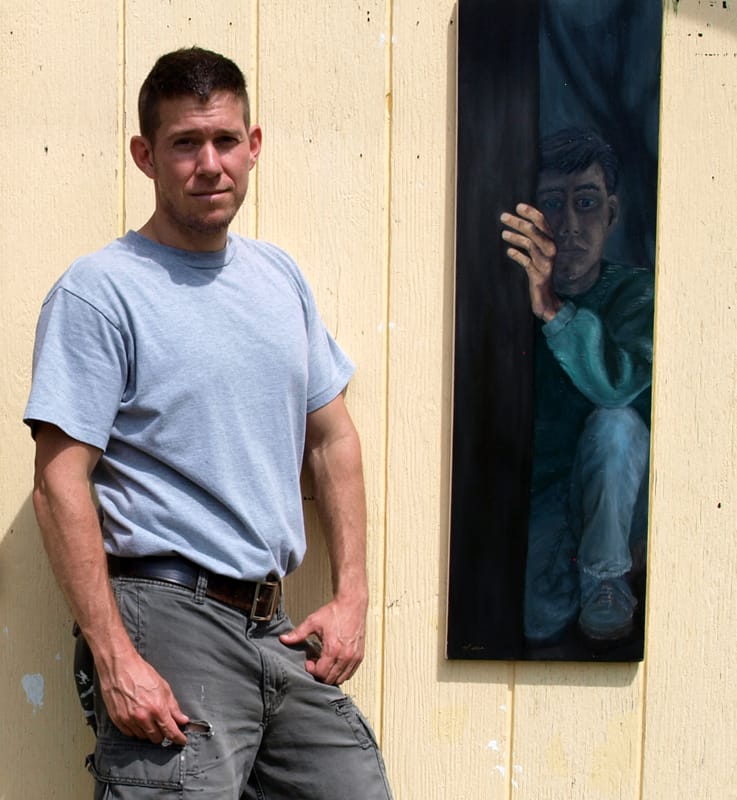
From Shadows to Clarity
Years after that old painting, Mathie found himself in another moment of reckoning while hiking on Mount Tam in California. Walking through thick fog, he saw dark shapes in the distance and began to cry, thinking they were demons. “And then I had a feeling that my grandmother and all of the elders scooped in and told me it was going to be okay. I realized the black things in the fog were branches, and the fear I had was my own psychology.”
For Mathie, making art works the same way. “When you use art as therapy, you’re tangibly dealing with the thoughts and emotions. Once I release the art, parts of the trauma are gone—or at least dealt with. Looking back at it, it feels like a story.”
When he turned 40, a Picasso exhibition in Seattle gave him another shift in perspective. “Picasso said he realized when he was 40 that he wasn’t his family anymore—he could explore his art as himself. That really resonated with me.”
Like Picasso, Mathie paints not as an extension of anyone else’s expectations but as himself—queer, unhidden, and free. His work has become a record of that journey: from fear to release, from shadows to light.
“I can make whatever I want; I don’t have to hide behind safe seascapes.”
This painting was as part of a larger figurative show in 2012 at a gallery in Port Townsend called AOT (Artists on Taylor).
The show was called Conversation Pieces and had both male and female nudes. The show caused quite a stir with people praying outside the gallery at the opening. Someone went to the city council to get the show closed. And Twitter closed my account over the images, which were not sexual, only nude.
The work was done at a time when I was trying to understand my own identity and cope with a super conservative, religious family. I learned a lot from doing the work and the gallerist had many important conversations as a result with people who came to the show.