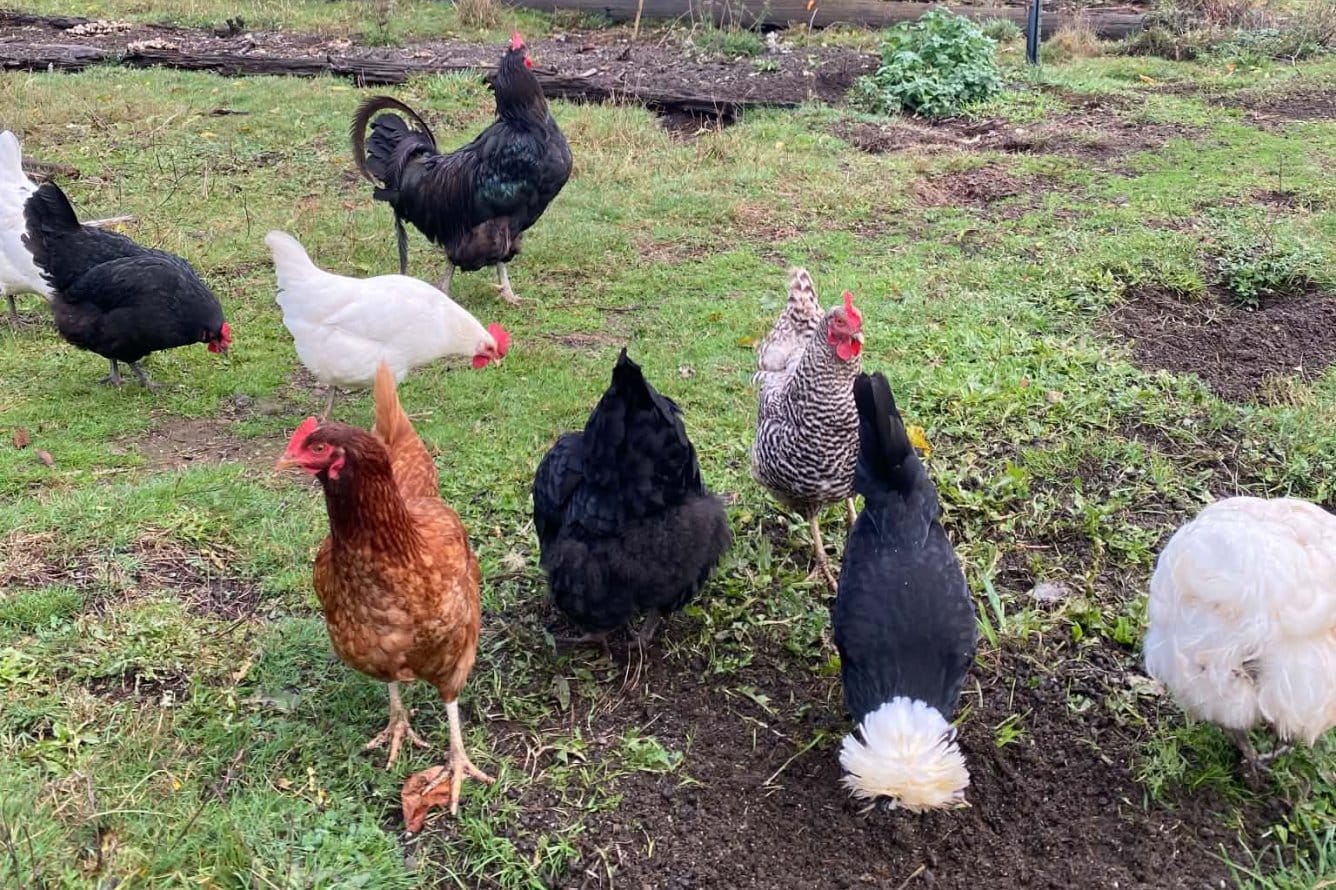

Most people hear a flock of chickens and think it's all noise. A lot of clucking, squawking, crowing, and cavorting. But I've spent enough time around chickens to tell you something different: a flock has culture, social structure, and even a language. And if you spend enough time listening, you can learn to speak it too.
When visitors come to the ranch, I sometimes stop them in the barnyard and introduce the idea that chickens are having conversations all around us. I usually start with the most vocal member of the flock, a rooster.
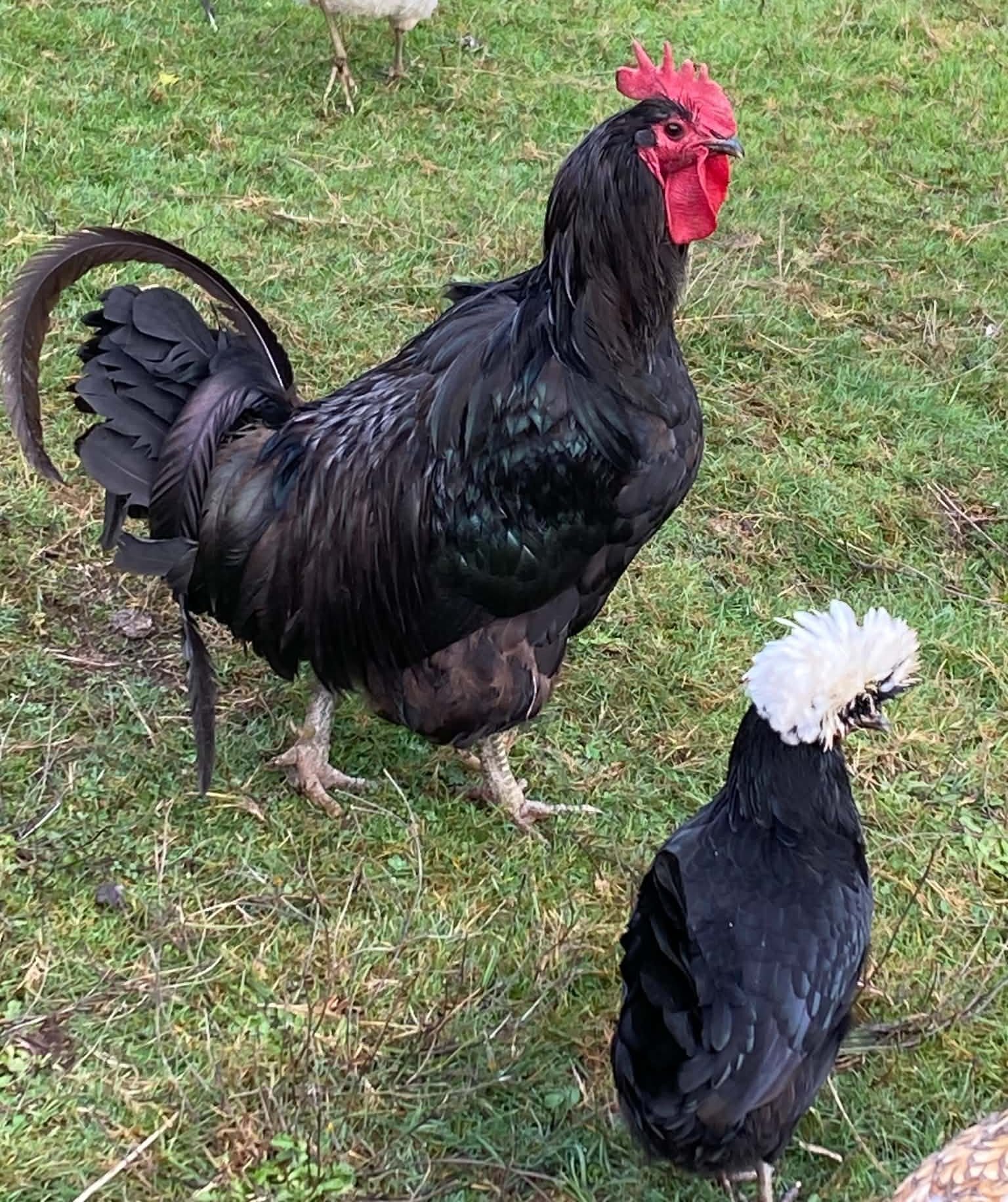
I point out the particular sound he makes when he discovers food. “Watch what happens,” I tell them. Sure enough, the hens come running. He's announcing that he's found something interesting and yummy. A good rooster will lead a clutch of hens on patrol to find food. When he finds some, a low clucking rumble is, “Hey hens, food!”
Then, we listen to his alert calls. I explain that not all warnings are created equal. One might be little more than a heads-up about humans wandering around the barnyard. The hens barely change their routine. But when a hawk begins circling overhead, the rooster's call changes. This time, the hens know it's serious. They scatter for cover, making a run for the fence lines, trees, and brush where nothing can swoop down upon them.
Everyone who spends time here eventually learns the difference between a serious rooster alert and a casual announcement. Even our dogs know the distinction. A serious alarm call from any rooster is enough to send them bounding outside to investigate.
And there's more to chicken vocabulary than food and danger.
There's the egg song, complete with its chorus of responses from the rest of the flock. I may have to pause the barnyard tour with my voice drowning in the cacophony coming from the barn, where the nest boxes are located. If we hear it somewhere else around the property, there's a good chance a hen has established a secret nest and is hiding a clutch of eggs. We have found more than a few rogue clutches that way, usually in the Spring when hens think about hatching some baby chicks.
Not surprisingly, roosters also have a particular call for me. When I come out of the house and head toward the barn, I listen closely. They'll sound out what I can only describe as their name for me. The hens recognize the announcement and come running to greet me. Of course, it helps that my arrival often means something good, like treats.
Visitors also get to watch the flock's social education in action. Older hens introduce younger pullets to the important things: where the best dust-bathing spots are, where food can be found, and which places are worth investigating. A large flock develops a surprisingly complex social arrangement, with relationships and pecking-orders that change over time.
I'll sometimes point out an older hen who has lost feathers on her backside. She's been slipping in the social hierarchy, and we give her a little help by fitting her with a chicken saddle while her feathers recover. A younger hen with the same feathers missing can mean she’s getting too much rooster attention. It's a reminder that these relationships aren't static. The flock is continually negotiating its own social hierarchy.
For all the talk about chickens being competitive, they are remarkably cooperative. A food offering can certainly create a momentary frenzy, but the flock has plenty of ways to share information and resources. And despite the popular image of roosters constantly fighting, all of our chickens, including the roosters, settle down and sleep peacefully together under the same roof.
Usually, the last one to settle in for the night is a rooster. He’s making sure all the hens are in first, and have gone to roost. It’s why we call that guy a “rooster;” the best ones making sure the hens are safely tucked on to a roosting pole at night.
Science is beginning to catch up with what attentive chicken keepers have observed for generations. Researchers have demonstrated that chickens use distinct alarm calls for aerial and ground predators, and that hens respond differently depending on the warning. They've also shown that a rooster's food call actually conveys information about food, rather than simply attracting attention. In other words, there's more going on than instinctive noise.
Chickens are essential members of a working homestead, but their value goes well beyond eggs, pest control, and turning scraps into something useful. They have individual personalities, social relationships, learned behaviors, and a vocabulary that serves the entire flock.
At some point during a tourist visit, I like to give a little demonstration. I make the same clucking sound a rooster uses when he's found food. The hens come running toward me from all directions.
There's usually a moment of astonishment, followed by laughter.
I'm not doing anything particularly magical. I'm just speaking Roo.