Queer history is not background. It is infrastructure. It is how communities survive erasure, recognize themselves, and pass forward the knowledge required to live openly and fully. When queer media disappears, it is not just stories that are lost—it is strategy, memory, and proof of possibility.
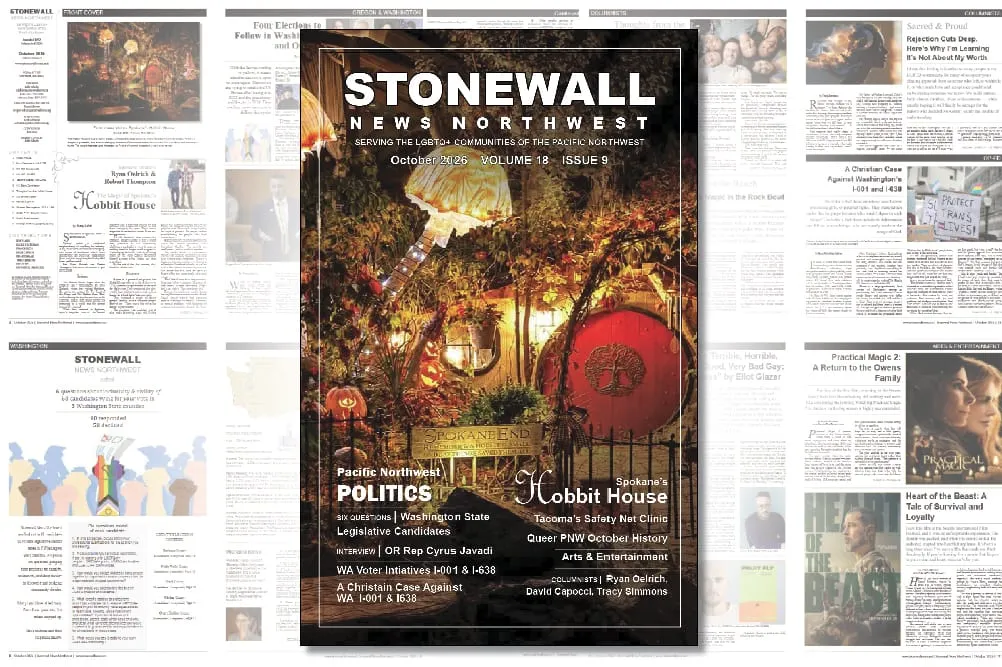
The newly digitized release of Stonewall’s first 16 years is not a commemorative gesture. It is a reclamation, and it belongs to us.
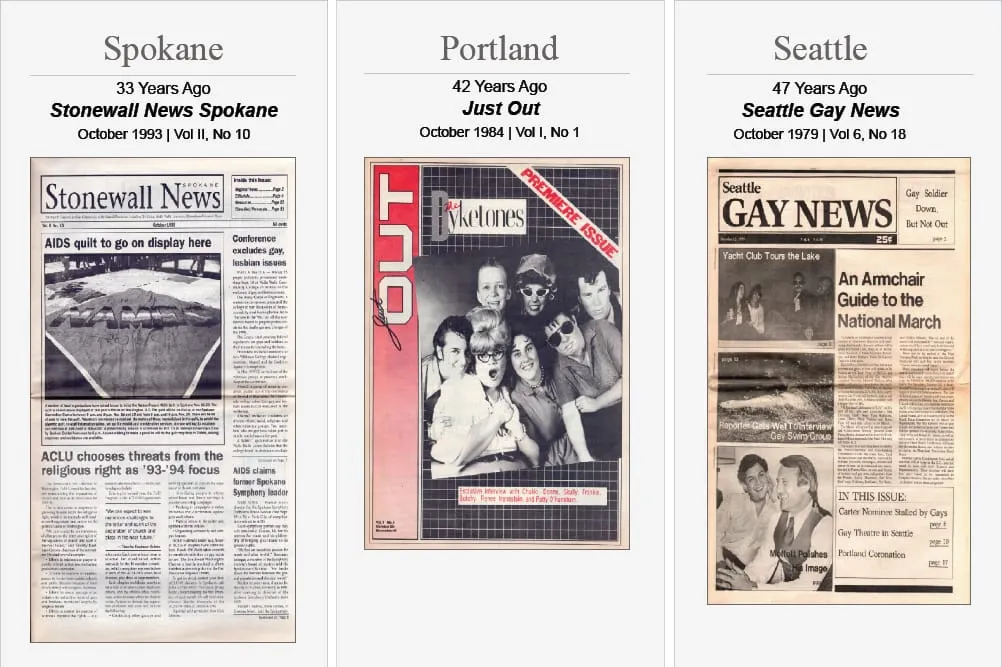
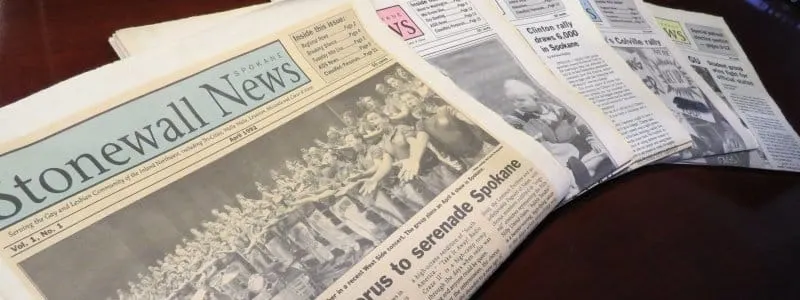
Stonewall began in 1992 as Stonewall News Spokane, founded by Lawrence Stone under Stonewall Publishing, Inc. at a time when visibility itself carried consequence. In Spokane, printing the words “gay” and “lesbian” was considered risky. Printers refused bids. Advertisers hesitated. The expectation was silence or shame. Stonewall rejected that expectation outright. It was built deliberately—as a fully licensed, professionally produced newspaper that asserted queer lives were not marginal, and that documenting them was a political act.
The archive does not soften that reality. Its pages show how rights were contested locally, how nondiscrimination protections were fought for inch by inch, and how the AIDS crisis shaped both urgency and grief. They also show something just as important: how dignity was practiced.
Through editorial standards, cartoons, arts coverage, and cultural criticism, Stonewall insisted that queer people were entitled to complexity, humor, and self-definition. It did not simply report on a community—it helped teach one how to see itself clearly.
In 1995, publishing leadership passed to John Deen, and the paper became Stonewall News Northwest, reflecting a broader regional scope.
In 2005, Mike Schultz purchased all shares of Stonewall Publishing, Inc., retaining stewardship of its archives, intellectual property, and copyrights across three publishers and 16 years.
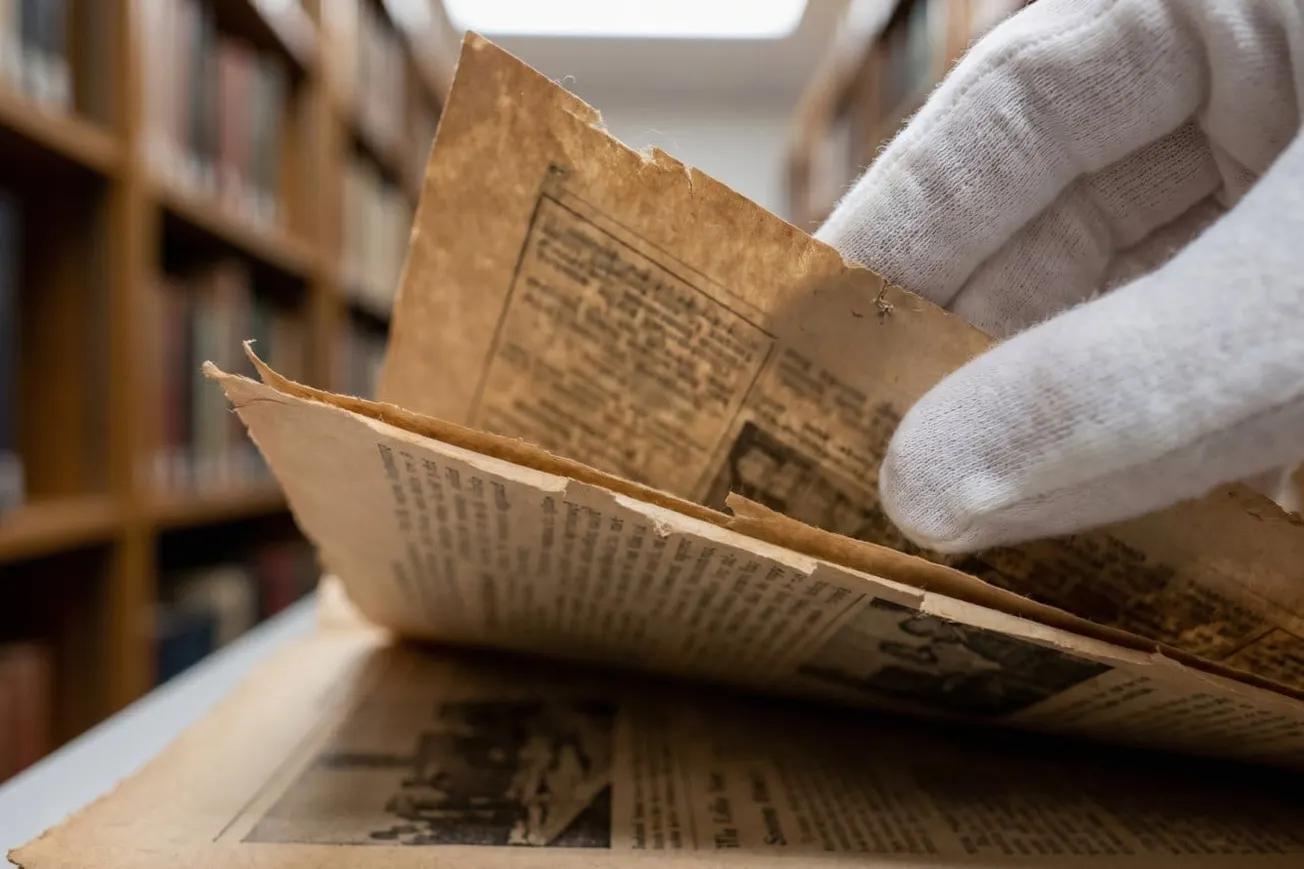
Archives like this are not neutral repositories; they are tools. They show how communities organize under pressure, how visibility is claimed before it is safe, and how futures are imagined when none are promised. Making this archive accessible is not about nostalgia. It is about continuity.
This information belongs to us. Reading it is not passive. It is how we honor those who took risks to be visible, and how we give future generations something essential: evidence. Evidence that queer lives were lived fully here. Evidence that authenticity is not new. Evidence that they inherit not just struggle, but lineage.
The archive is open. Read it. Use it. Learn from it. Our future depends on remembering how we got here.
Visit the online archive for Stonewall News Northwest and other PNW LGBTQ+ publications here.